Stop Nagging Kids: Visual Chore Charts on Wall Screens
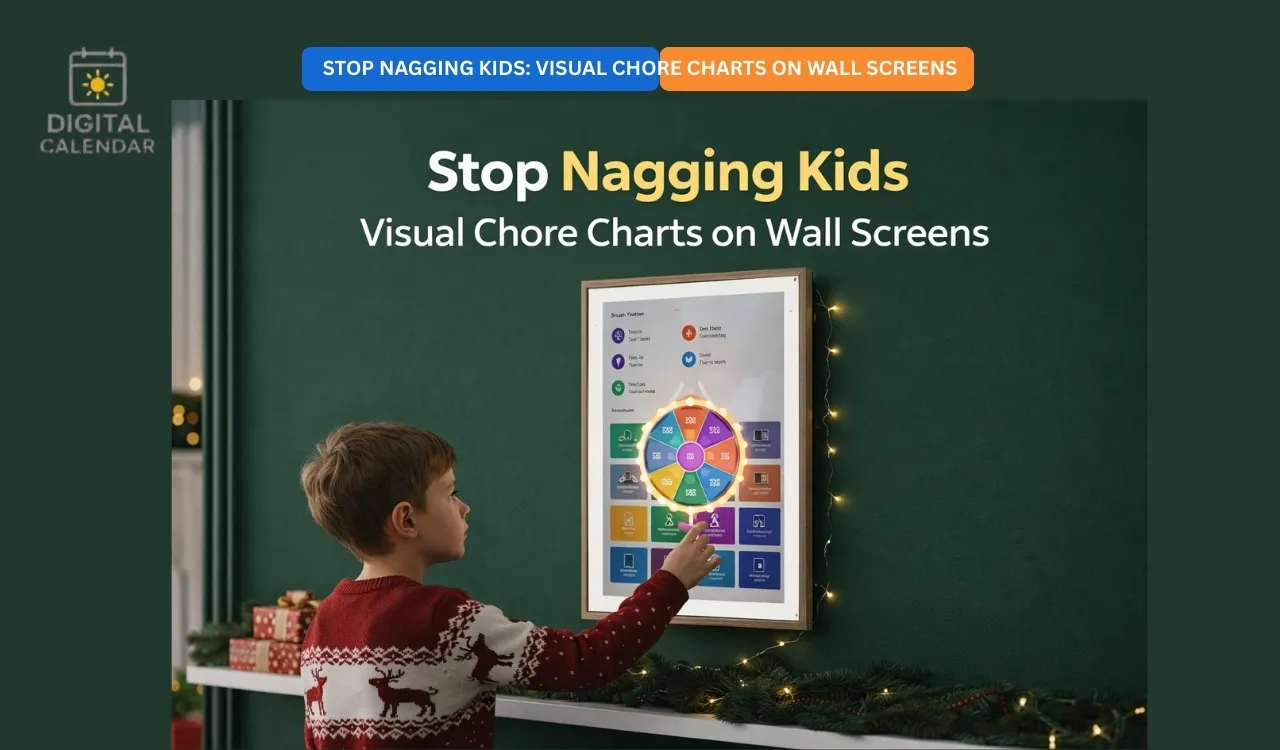
Visual Chore Charts on Wall Screens help parents stop nagging kids by showing daily tasks clearly, building routines, responsibility, and habits.
I was at a point in which I was used to repeating each time to my kids just to remind them that it was time to go to school. Homework, tooth brushing, school bag packing and simple chores became turned into a daily battle of verbal disagreement. This was personal, yet there was the problem of the real issue being that the spoken words faded away too quickly. My children were not boycotting they were forgetting. I had to have something permanent, serene and open. It is then that I resorted to the use of visual chore charts on wall screens. Our domestic environment was altered at once.
When the tasks and routines were transferred onto a collaborative wallboard digital calendar, my position changed. I ceased to be the shrieking voice in the background. It was the responsibility of the screen, not the parent. My children were fully aware of what had to be done through the shared digital calendar display. Fewer arguments followed, and everyday life felt more orderly rather than disorganized. This positive shift is what makes visual chore charts on a digital calendar truly worth it.
Amazon Affiliate Disclaimer
https://digicalendars.com participates in the Amazon Services LLC Associates Program, an affiliate advertising program designed to provide a means for websites to earn fees by linking to Amazon.com and other affiliated sites. As an Amazon Associate, we earn from qualifying purchases made through the links on our website. This does not affect the price you pay your support simply helps us maintain the site and continue offering honest, valuable reviews and recommendations.
Why Verbal Reminders Fail
I had thought that my children Visual Chore Charts on Wall Screens did not listen to me because they wanted to, but science informed me that is not the case. Children have difficulties in working memory. In case a reminder is spoken, it has to compete with the toys, screens, and imagination. It just fades away most of the time. Child himself does not make the choice of disobedience. The instruction vanishes.
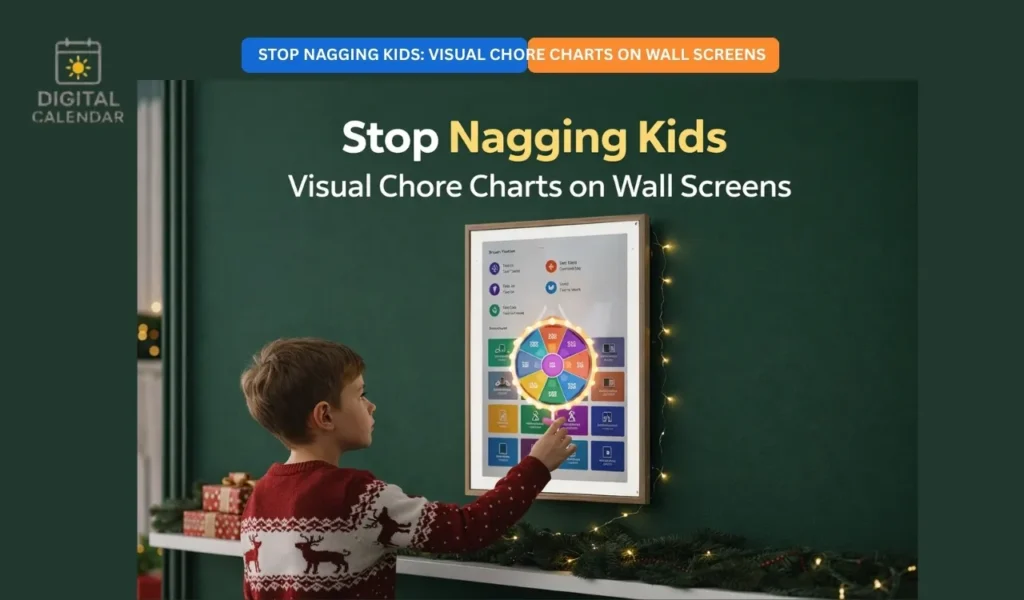
No physical trace is involved with verbal reminders as well. After the words are uttered they are no longer there. Time blind kids are not able to sense urgency. “Later” feels endless. In the absence of something visible, there is an optional feeling of chores. Such an incongruence legitimizes redundant conflict between parents and children.
Best Digital Calendars
The Mental Load Parents Carry
The other under-the-surface problem is the psychological burden on parents. I had the whole family to-do list in my head. I was following routines, deadlines and duties all the time. And that position makes parents managers rather than caregivers. In the long run, it will result in fatigue.
The load of visual chore charts is externalized. Your brain leaves when work is on a wall screen. The accountability is distributed and apparent. I ceased to follow mentally everything. The screen held the list. That mere change alleviated stress and made one more patient.
How to Use Digital Calendar’s Features – Complete Guide
How to Use Digital Calendar’s Features 2 – Complete Guide
Why Visual Cues Change Behavior
Pictorial images are still there and still. A job on a wall does not scream or quarrel. It simply waits. Children interpret images unlike verbal instructions. The sight of a task to be done awakens logic rather than defensive feeling.
I could see that resistance then decreased as the chores were on sight. The screen felt neutral. My children did not feel bossed about. They felt informed. This emotional disparity was an easy way to cooperate. Visual reminders are effective in that they eliminate conflict in communication.
Best Digital Picture Frames
From Nagging to Checklists
Checklists are effective since they provide a sense of clarity. Children are able to notice the point of beginning and where to stop. It is not ambiguous as to what done means. Formation provides security to the young brains.
Dopamine is also activated when a task is checked off. That small reward feels good. My children began to like finishing rather than evading duties. Checklists provide freedom as compared to verbal nagging. Children decide the sequence of things and when. Attitude is dramatically enhanced by that control.
Digital Calendars
The Neutral Third-Party Effect
Once the list of chores resides in a wall screen I am not the enforcer anymore. I simply point to the display. The battle is no longer with me. It ceases to be parent and child. It is child versus- the list.
This indifference transforms the whole perspective of parenthood. I am not against my kids but I stand with them. We collaborate in getting things done. Arguments are substituted with encouragement. The wall screen is not a place of tension, but a silent partner.
What a Digital Family Wall Screen Is
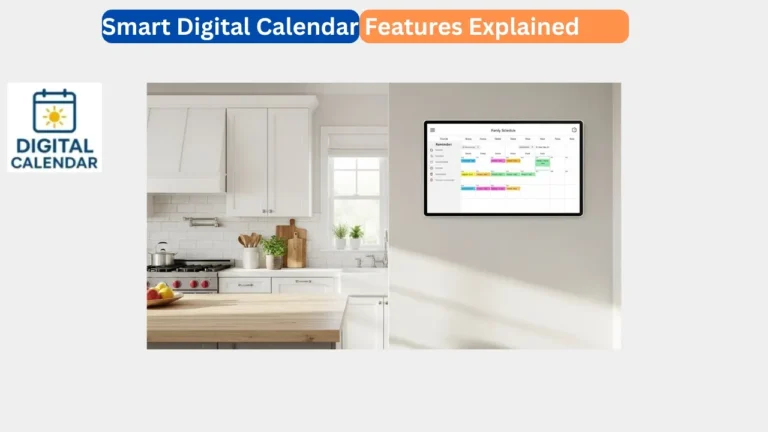
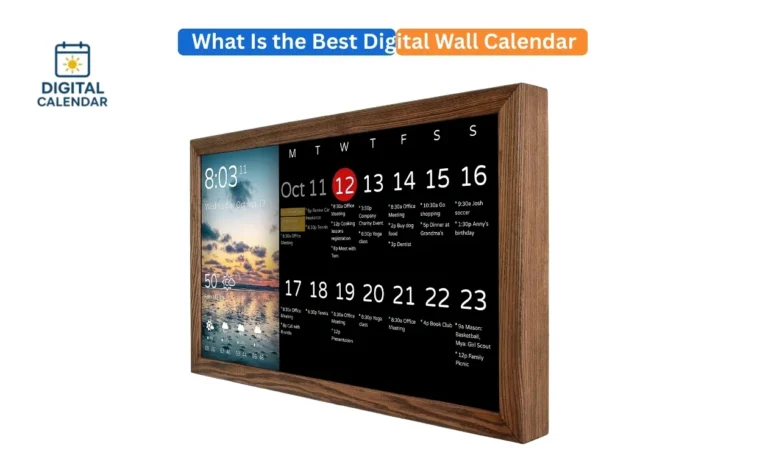
A family wall screen is an interactive screen that has a calendar, to-do list, and chore board. paper lists are lost and the white boards lose their significance in the background. An electronic screen remains readable, clean and up-to-date. It turns into a house day-to-day command centre.
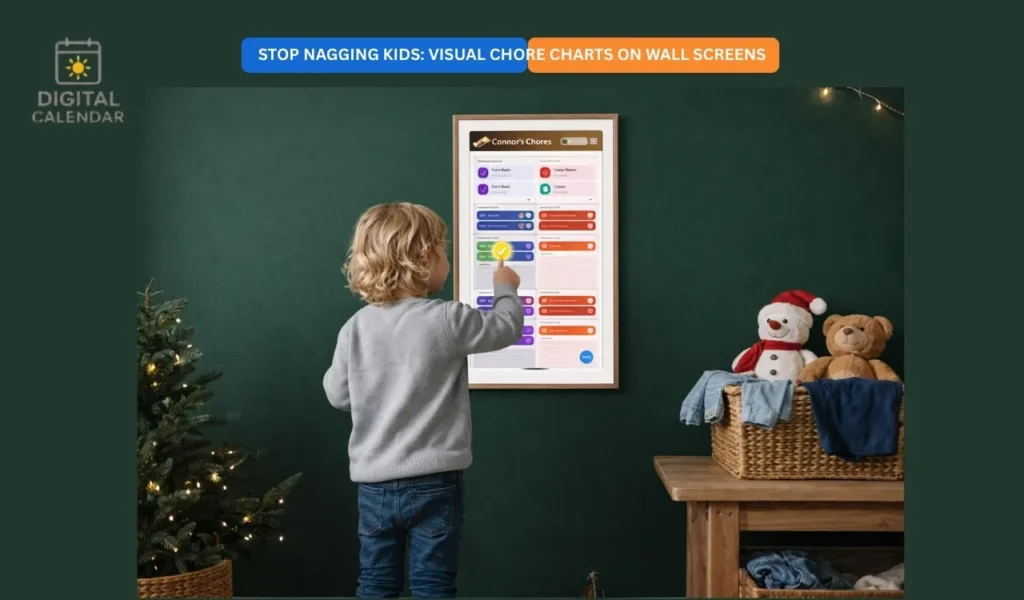
ApoloSign Digital Calendar is made to do so. It sync all family-related schedules, routines, and chores into a single shared visual display. Everything is automatically updated through seamless sync, removing manual effort and confusion. This consistency builds confidence and encourages habitual, reliable ways of getting things done.
Key Benefits of Visual Chore Charts
A wall-mounted digital chore chart provided provided me with benefits I had not originally anticipated. The system is beneficial to children and their parents both emotionally and practically.
Major benefits I experienced include:
- Fewer verbal reminders throughout the day
- Reduced mental load for parents
- Clear expectations for kids
- Better routine consistency
- Less conflict and more cooperation
These benefits grow stronger over time. The system supports calm, not control.
Designing a Kid-Friendly Chore Board
Design is a significant factor of engagement. I split the screen into zones. One side had given schedules such as school and practice that were fixed. The other partner had non-time-bound duties such as homework and housework. This made children have a visualization of time pressure.
Tasks were easier to process in color codes. There was a color of homework, chores and urgent items. Even a look passed across expressed priorities. The design was good, which minimized overwhelm and maximized follow-through.
Replacing Repetition with Automation
Everything with me was different because of automation. Routines were set to run automatically in the mornings. Chores would self-renew on a weekly basis. Reminders were appearing monthly without any effort. I ceased to copy the same lists over and over.
Rewards added motivation. Tasks earned points. Privileges were made into points. Kids saw progress instantly. The system also formed its feedback loop. Customs made without continuous coercion on my part.
Adapting the Screen for Different Ages
Young children reacted the most to icons and short lists. Playing with the screen was pleasant and satisfying. Rudimentary habits were more effective at this point. Success was supported by sounds and animations.
Children of higher age required greater ownership. The views on a weekly basis kept them on track. Responsibility was enhanced by delegating them the part of the screen. The board checked it more when they thought that it was theirs.
Start Small and Build Confidence
I did not turn the entire world upside down. My initial stressful hour was one. One checklist. One routine. This was sufficient to realize results fast.
I grew slowly as habits were formed. The wall screen was easily adapted. Keeping it small helped to avoid being overwhelmed. Regularity was more important than excellence. The transformation was triggered by one visible checklist.
FAQs: Visual Chore Charts on Wall Screens
Conclusion
In my case, wall screen visual chore charts eliminate the necessity to do a constant nag. They substitute the quick words with silent, incessant notifications. Children react more effectively since the system corresponds to the functioning of their brains. This is beneficial to the parents since mental load is reduced. Conflict is substituted with cooperation.
Incorporating the automation and incentives into the daily life in terms of visible checklists helps to make it simpler and more predictable. Routines are turned into joint aspirations as opposed to power games through a wall screen. This is an actual permanent solution to parents who are sick and tired of having to repeat themselves.
Fore more information about Digital Calendars and Picture Frames ,then hit the button.