Wall-Mounted vs Tabletop Digital Calendars
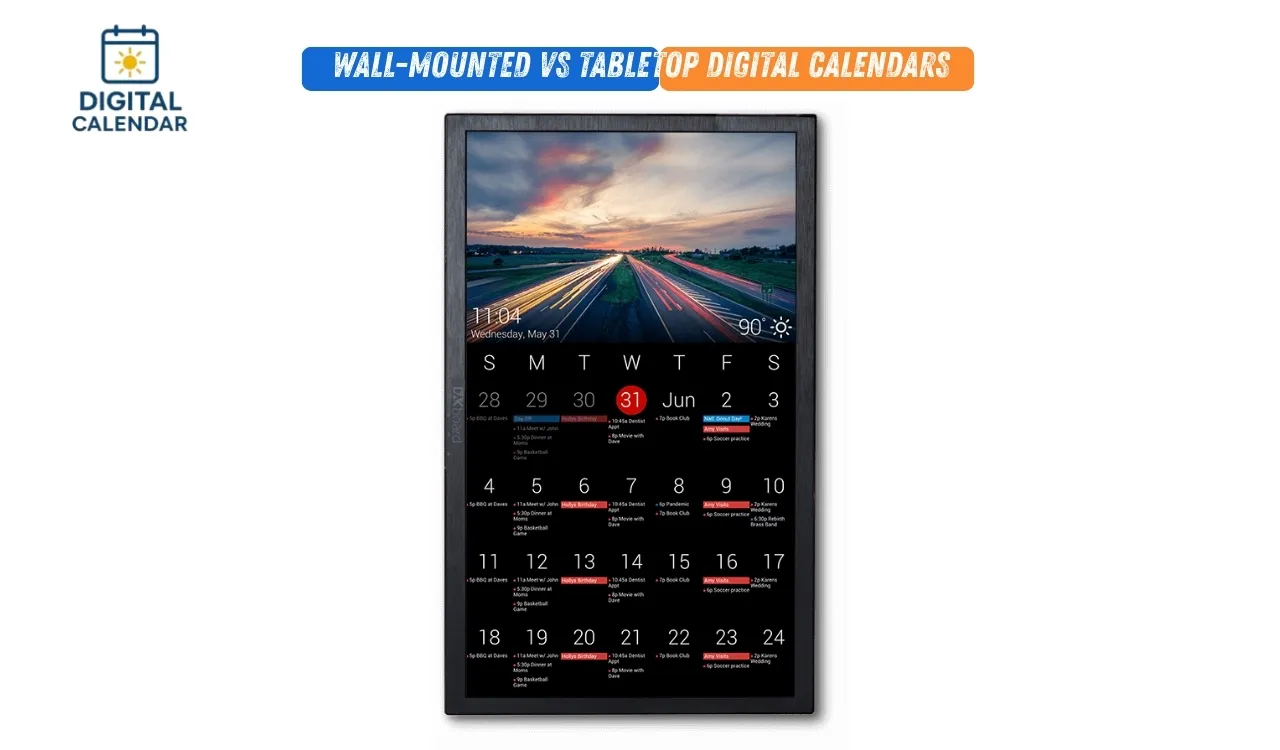
Wall-mounted vs tabletop digital calendars compared to help you choose the best option based on space, visibility, placement, and daily scheduling needs.
To determine the location of a calendar, I began to compare wall-mounted and tabletop digital calendars. Both alternatives appeared to be handy, but they fulfilled different functions. The location influences exposure, comfort and day to day interactions. I also understood that the frequency of use of the calendar could be decreased by selecting an incorrect type. A calendar must be made naturally and not crammed. Such comparison played a significant role prior to reaching the final decision. Knowing the difference also made me not regret.
Having seen both styles used in real-life scenarios, it became clear where each one excels. Wall-mounted options are designed for shared visibility and easy viewing from a distance, making them ideal as a digital calendar for families or offices. Tabletop models focus on more personal, close-range use and suit individual workspaces. Each design supports different habits and room layouts, and there is no universally superior choice. The right decision depends on lifestyle and space, which ultimately makes the choice much easier.
Amazon Affiliate Disclaimer
https://digicalendars.com participates in the Amazon Services LLC Associates Program, an affiliate advertising program designed to provide a means for websites to earn fees by linking to Amazon.com and other affiliated sites. As an Amazon Associate, we earn from qualifying purchases made through the links on our website. This does not affect the price you pay your support simply helps us maintain the site and continue offering honest, valuable reviews and recommendations.
Understanding Wall-Mounted Digital Calendars
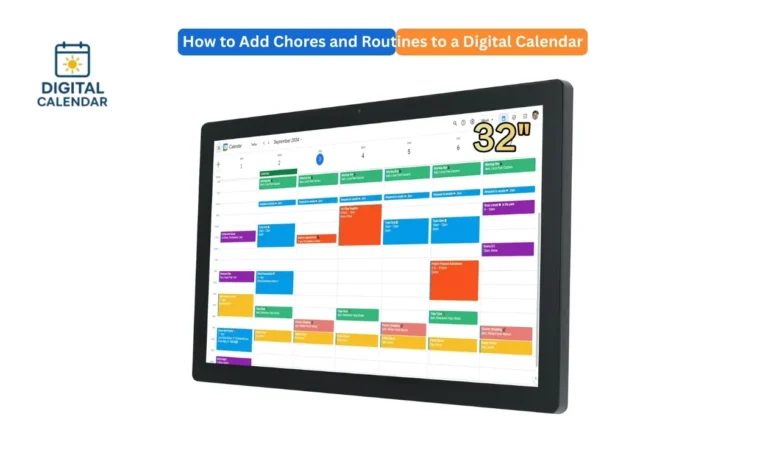
Digital calendars that are hung on the walls are meant to be seen at a distance. They are commonly installed in kitchens, corridors or offices. I happened to see that they behave like information boards. Schedules can be viewed by anyone without the need to go near them. This augers well with collective planning. The display remains at a constant position. Reliability is enhanced by the stability.
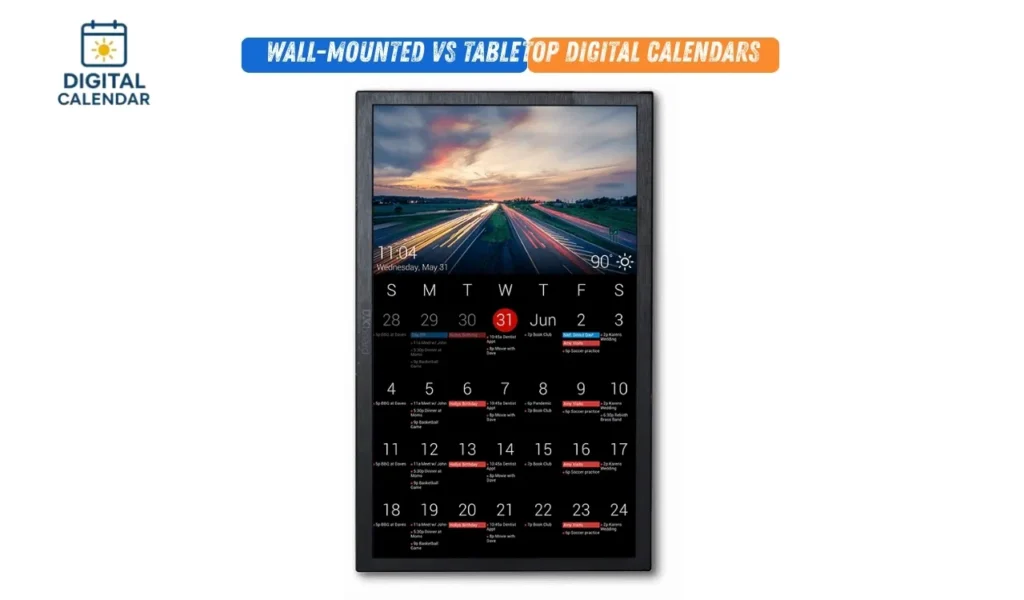
Wall-mounted calendars promote passive checking as they can be checked at any time since they are always visible. When they are walking, people will just look at them. This minimizes the use of reminders. Schedules stay top of mind. They are effective in a hectic work environment. There is an enhancement in shared responsibility. The primary benefit is the visibility.
Best Digital Calendars
Understanding Tabletop Digital Calendars
Tabletop digital calendars are supposed to be used in a close interaction. They are seated on desks, counters or side-tables. I considered them perfect in personal planning. The distance used in viewing is minimal. The communication is deliberate and dedicated. They are easy to reach. This facilitates regular updates.
These calendars are more personal. They fit in personal schedules and work zones. I saw that they blend in desks naturally. They do not dominate the room. There are flexible designs of table tops. You can move them easily. This convenience is provided by this portability.
Best Digital Picture Frames
Visibility and Viewing Distance
The greatest difference between the two types is visibility. The calendars mounted on the walls can be read even in the middle of the room. This favors the families and teams. All people perceive the same information. There is no problem with distance. Large text works well here. Shared awareness improves.
Tabletop calendars should be viewed closer. This does not have a drawback on the personal spaces. They are single user designed. The text is smaller and more detailed. There is a controlled and planned visibility. This suits focused planning. Effectiveness is a matter of distance.
How to Use Digital Calendar’s Features – Complete Guide
How to Use Digital Calendar’s Features 2 – Complete Guide
Impact on Daily Habits
Wall calendars have passive effects of habit formation. Individuals look at them unreflectively. This reinforces routines. I had fewer tasks that I overlooked. The calendar ended up as a part of environment. Habits formed naturally. Consistency improved. Planning felt shared.
Tablet calendars promote active behavior. You sit and you look at them, knowingly. This facilitates elaborate planning. I would use mine in the course of work. It was like having a personal assistant. Habits became deliberate. Both styles influence behavior in a different manner. Habit style matters.
Digital Calendars
Installation and Setup Considerations
Calendars mounted on the wall have to be installed. Wall space and mounting equipment are required. Positioning should be strategized. Power access is important. After installment, they are fixed. This adds permanence. Initial set up is more cumbersome.
Tabletop calendars require minimum configuration. You attach them and put them in charge. No drilling is required. They are easy to reposition. This flexibility is helpful. Setup feels simple. One of the advantages is convenience.
Which One Works Best for Different Spaces
Dissimilar spatial spaces prefer dissimilar designs. Wall-mounted calendars are an advantage to homes where schedules are shared. They are also preferred by offices because of visibility. Tabletop calendars are appropriate in bedrooms, desks and personal offices. Any one of these spaces is suitability dependent. In keeping with space facilitates utilization.
Best use cases at a glance:
- Wall-mounted for families and offices
- Wall-mounted for shared visibility
- Tabletop for personal desks
- Tabletop for close interaction
- Tabletop for flexible placement
These guidelines simplify the decision. Purpose matters more than appearance. Correct matching improves satisfaction.
Aesthetic and Space Balance
Calendars mounted on walls are a decor element. They may be distinguished or be merged. Room balance may be influenced by size and design. I observed bigger screens are capable of crowding small rooms. Proper sizing prevents this. Aesthetic harmony matters.
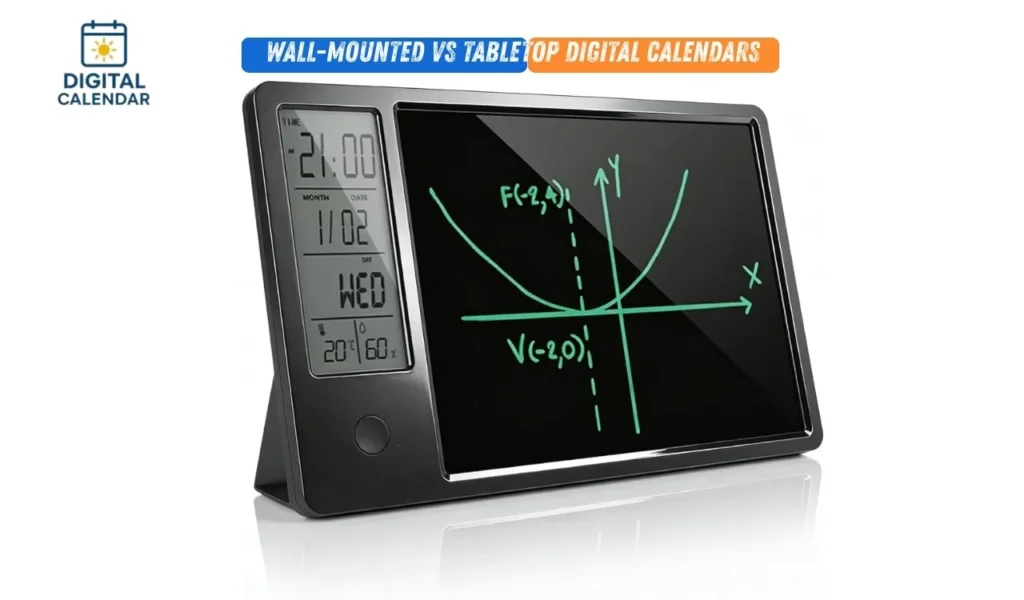
Tabletop calendars are less conspicuous. They merge into furniture with ease. Visual impact is smaller. This suits minimal spaces. There is a need of balance between design and function. The calendar ought to be embraced. Aesthetic comfort stimulates use.
Maintenance and Durability
The calendars mounted on the walls have a lower level of physical contact. They stay cleaner. Fingerprints are fewer. Durability feels strong. Maintenance is minimal. This suits busy households. Reliability is enhanced in the long-term.
Table top calendars are tapped more frequently. They may need more cleaning. They are however easy to access. The placement is dependent on durability. Care is simple. The two types are long-lasting when used normally. There are slight different needs of maintenance.
Cost and Value Comparison
Differences in costs change based on size and features. Calendars that are mounted on the wall are usually bigger and more expensive. Value comes from shared use. A single equipment can be used by numerous individuals. This enhances profitability. Shared value matters.
Table top calendars tend to be cheaper. They focus on personal use. Convenience and flexibility are sources of value. Cost aligns with purpose. They both are good at the right price. Matching cost to need is key.
How I Chose Between Wall and Tabletop
I made the choices on the basis of my preferred daily interactions. Wall-mounted made sense in the case of shared planning. Tabletop was preferable to concentrated work. I took into consideration space, habits, and visibility. This work practice minimized suspicion. The choice felt logical.
After being installed, the decision has been justified. The calendar was an innate part of life. Usage increased. Planning felt easier. My routine was supported by the design. The option was validated by alignment.
FAQs: Wall-Mounted vs Tabletop Digital Calendars
Conclusion
In my life, wall-mounted and tabletop digital calendars are used to fulfill different purposes. Calendars mounted on the walls are excellent in shared visibility, and passive checking. Tabletop calendars are used in individualized planning. There are no situations when one is superior to the other. The correct decision will be based on space and habits.
The two styles enhance organization when selected wisely. Effectiveness involves placement. It is necessary to understand the way each of them is implemented into everyday life. The most acceptable calendar is the one that has a natural feel. It is the comfort that defines the long-term value.
Fore more information about Digital Calendars and Picture Frames ,then hit the button.