Digital Calendars with Touchscreen vs Non-Touchscreen

Compare Digital Calendars: Touchscreen vs Non-Touchscreen displays. Learn usability, features, and which option fits your daily planning needs best.
I began to compare digital calendar with touch screens and non-touch screens when the decision to use one of them on a daily basis became puzzling. Both choices were similar to the eye of the beholder. Their styles of interaction however were totally different. I was interested in knowing what kind is more appropriate in the everyday life. This was important to me in terms of convenience, ease of use, and reliability. This was not only a decision of technology. It was concerning the way the calendar would be used in actual practice on a daily basis.
The differences were made very apparent after spending time with both types. Touchscreen calendars are flexible and have direct control. Calendars without touchscreen are concerned with making it straightforward and reliable. Both of them have advantages based on user and surroundings. The knowledge of these differences allowed me to make a decision with certainty. It has also altered the way I assess digital tools. Functionality was more important than characteristics.
Amazon Affiliate Disclaimer
https://digicalendars.com participates in the Amazon Services LLC Associates Program, an affiliate advertising program designed to provide a means for websites to earn fees by linking to Amazon.com and other affiliated sites. As an Amazon Associate, we earn from qualifying purchases made through the links on our website. This does not affect the price you pay your support simply helps us maintain the site and continue offering honest, valuable reviews and recommendations.
How Touchscreen Digital Calendars Work
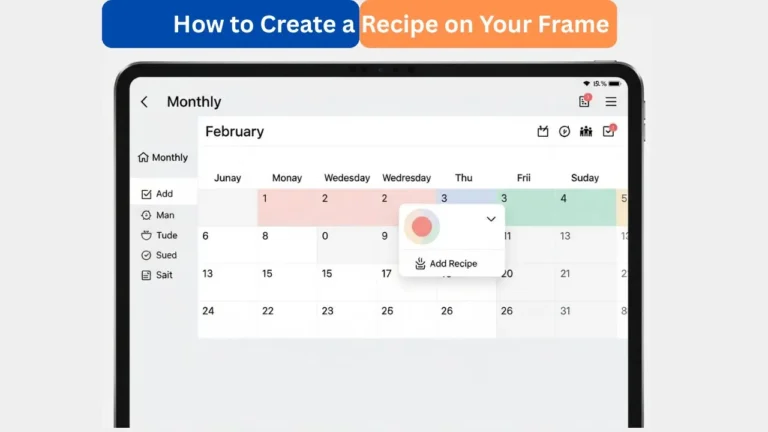
Digital calendars that are operated by touchscreen give the opportunity to interact directly with the display. I am able to tap, swipe and scroll schedules. It is easy and quick to edit events. One can make changes on the screen. This will enhance flexibility in planning. Communicating is contemporary and entertaining. Control stays in my hands.

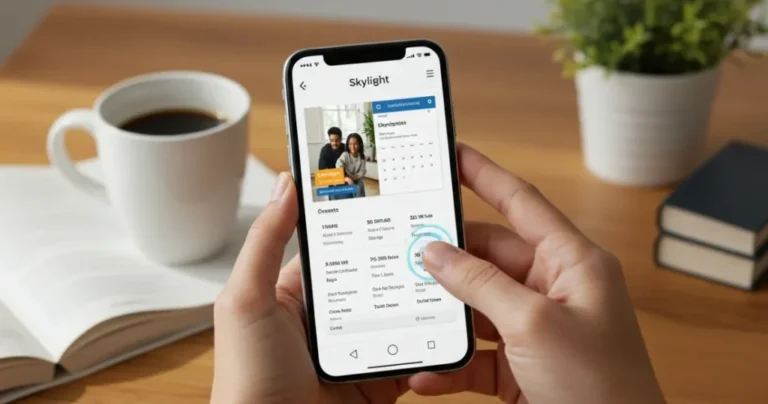
The touchscreen is similar to a smartphone or a tablet. This is familiarity that decreases the time of learning. Tweaking of settings is easy. Navigation feels natural. Customization is supported by touch interaction. It encourages active use. This is comfortable to those who are tech-savvy.
Best Digital Calendars
How Non-Touchscreen Digital Calendars Work
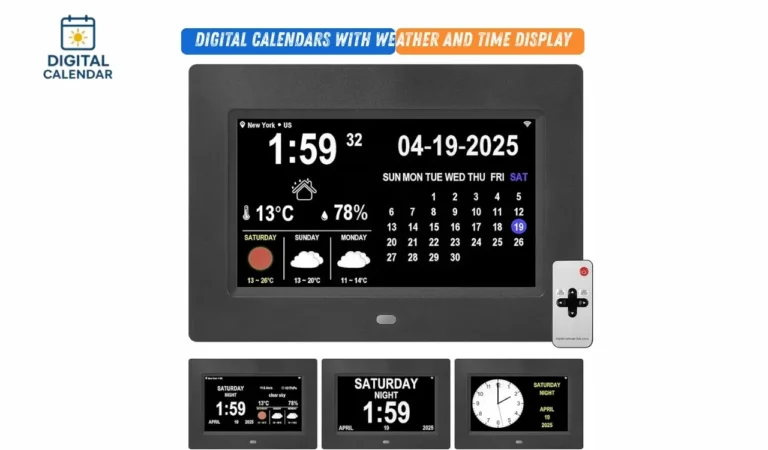
Digital calendars that do not have touch screens are based on sparse input features. The majority of updates are made via an app or a remote control. The exhibition itself is more of a sightseeing. This design maintains low levels of interaction. This was a soothing method to me. The screen remains sharp and clear. Planning feels passive.
Since it does not have any touch input, accidental changes do not occur. The calendar is consistent during the day. This will come in handy within the common areas. In non-touch designs, there is no interaction but visibility. They are silent in the background. They rely primarily on simplicity.
How to Use Digital Calendar’s Features – Complete Guide
How to Use Digital Calendar’s Features 2 – Complete Guide
Ease of Use Comparison
User-friendliness is a factor of the user. Touchscreen calendars are easier with those who are at ease with technology. Face-to-face communication saves the time and effort. It has everything available on the screen. Learning feels quick. Control feels immediate. This suits active planners.
Users who just want simplicity will find it easy in non-touchscreen calendars. There is less to learn. Tapping and swiping are not needed. There is never a dull moment in information. There is predictability in the system. Convenience is provided by limited communication. This is appropriate to users with no desire of complication.
Best Digital Picture Frames
Interaction Speed and Convenience
There is fast change in touchscreen calendars. I can edit events instantly. It comes in handy when the schedule is to be updated regularly. Flexibility brings about convenience. Communicating is effective. Tasks take fewer steps. Time is important when people are in a rush.
The non-touchscreen calendars are slower to change. Another device is necessary to update. However, viewing is instant. Reliability and not speed is what makes convenience. There is no risk of mis-touch. This is effective in the case of stable schedules. The consistency is compromised with speed.
Digital Calendars
Accuracy and Accidental Input
Accidental touches may be sometimes posed by touchscreens. I observed this during the cleaning of the screen. Minor mistakes can happen. Sensitivity however can be decreased in settings. Knowledge can avoid mistakes. It takes practice to increase accuracy. Control remains strong.
The problem is avoided through non-touchscreen calendars. No unintended input can be made. The exhibition has not changed. This reliability is useful in the homes and offices. Accuracy stays consistent. A calendar is not changed when it is not updated on purpose. One of the benefits is the stability.
Best Use Cases for Each Type
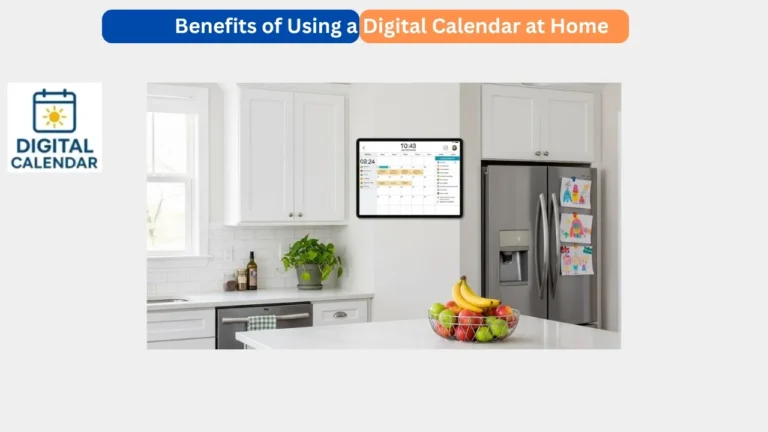
Diverse settings imply the need to adopt diverse designs. Touchscreen calendars will fit personal and technology-savvy areas. They promote constant contact and personalization. The non-touchscreen calendars would fit the shared or older setting. They are concerned with appearance and directness.
Where each type works best:
- Touchscreen for active planners
- Touchscreen for frequent updates
- Non-touchscreen for shared spaces
- Non-touchscreen for seniors
- Non-touchscreen for low interaction needs
Choosing depends on lifestyle. Both types serve clear purposes. Matching use case matters most.
Maintenance and Durability
Touchscreen calendars are to be cleansed regularly. The fingerprints develop rapidly. Caution is required to ensure that the screen is clear. Build quality is a factor of durability. Touch screens are a little bit fragile. It is significant to handle it properly. Maintenance is manageable.
The calendars that are not touchscreen are less vulnerable to maintenance. Screens stay clean longer. Physical contact is reduced. Durability feels stronger. These calendars manage the use of long-term. The work required in maintenance is low. This is appropriate in a busy or communal setting.
Curve and Availability of Learning
The touchscreen calendars have low learning curve. The users should have the basic comfort in touch interfaces. Most people adapt quickly. Experienced users are fine with accessibility. It is useful that the customization options are included. Learning feels intuitive.
Calendars without touchscreens have hardly any learning curve. They are instantly comprehensible by anyone. Accessibility is very high. This comes in handy with the elderly and children. The exhibition is self-explanatory. Convenience of learning is instant. This easiness is adoptable.
Cost and Value Considerations
Touchscreen calendars are usually expensive. High interaction is an addition to price. The flexibility and features are valued. The price is worth it when used on a regular basis. Investment depends on needs. Features drive value.
The other calendars are not touchscreen and tend to be cheaper. They are concerned with fundamental functionality. Reliability and simplicity are sources of value. The long-term usage is cost efficient. Cost aligns with purpose. This is the option of the budget-conscious user.
How I Chose Between Touch and Non-Touch
My decision was made based on the frequency of use of the calendar. I wanted to be able to be flexible and in control. My style of planning was well matched with Touchscreen. In the case of other people in my house, non-touch would be more effective. The move was not technical, but rather practical.
The two are both efficient when they are used in the right combination. This decision was made clear with the realization of daily habits. My routine can now be supported by the calendar in a natural manner. It fits my environment. That alignment matters most. Behavior should be facilitated by design.
Conclusion
In my case, touchscreen and non-touchscreen digital calendar have distinct benefits. Touchscreens are flexible, fast and controllable. Non-touchscreens are stable, simple and reliable. None of the two is always superior. The correct decision is a matter of environment and lifestyle.
Either of the types, when chosen intelligently, enhances day-to-day planning. Touchscreen calendars are suitable with the active users. The non-touchscreen calendars are appropriate in common and peaceful areas. It is easier to understand the work of each of them. The most suitable calendar is the one, which becomes a part of everyday life.
FAQs: Digital Calendars: Touchscreen vs Non-Touchscreen
Fore more information about Digital Calendars and Picture Frames ,then hit the button.