Can a Digital Calendar Replace a Paper Planner?
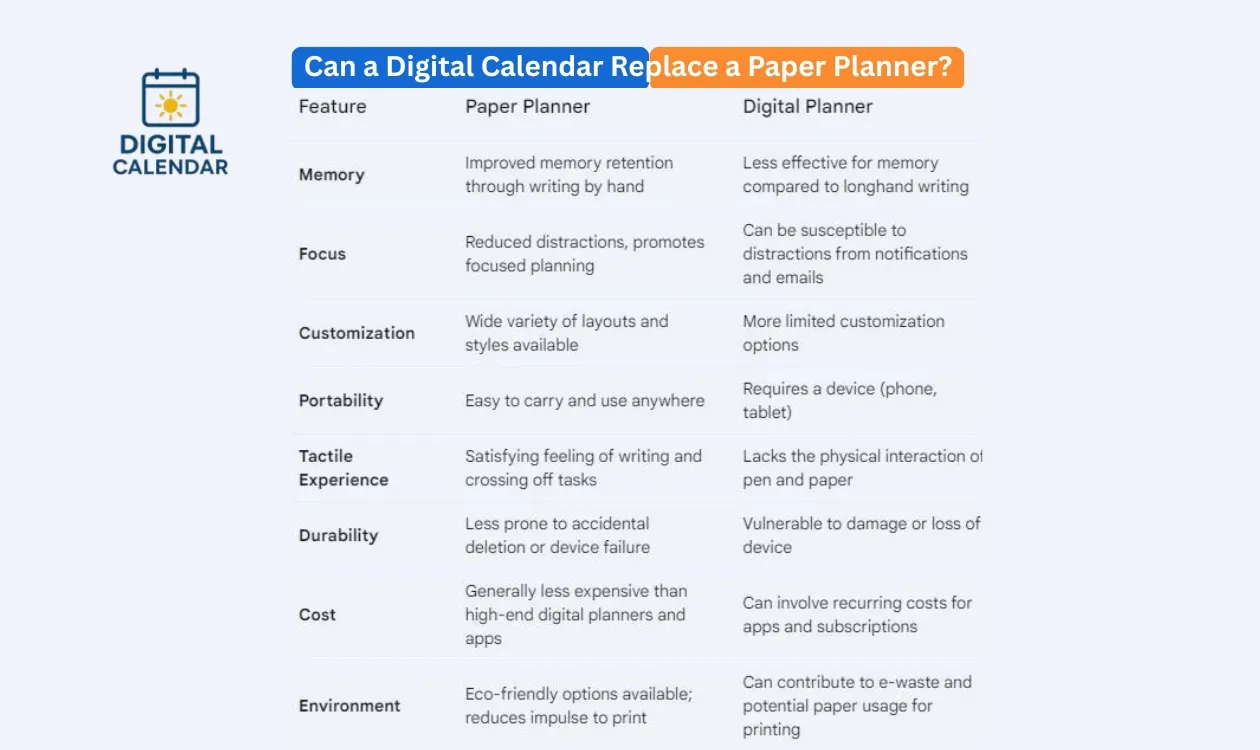
Explore whether a Digital Calendar Replace a Paper Planner? Compare convenience, reliability, and real-life usability for daily planning.
The reason I began to ask myself whether a digital calendar could replace a paper planner was because my notebook had gotten sloppy and was becoming old. Pages were easily filled, made changes difficult to handle, and plans that were crossed out made it difficult to follow. I enjoyed doing it by putting the things in writing but the problem of practicality was starting to emerge. Life was running too fast to allow paper planner to follow. I required a flexible and visible one. It seemed logical to have a digital calendar. I was interested to know whether it was able to substitute what I was accustomed to.
Since I used these in parallel, I came to the realization that this is not a question of mere preference only. It is functionality, habit and day to day efficiency. Digital calendars are structured and flexible whereas paper planners are emotive. I observed evident variations in the way each of them helped me in my routine. Learning about such differences assisted me in choosing the most appropriate one in the long run. The comparison has made me change my planning of days. It made me re-examine the concept of planning.
Amazon Affiliate Disclaimer
https://digicalendars.com participates in the Amazon Services LLC Associates Program, an affiliate advertising program designed to provide a means for websites to earn fees by linking to Amazon.com and other affiliated sites. As an Amazon Associate, we earn from qualifying purchases made through the links on our website. This does not affect the price you pay your support simply helps us maintain the site and continue offering honest, valuable reviews and recommendations.
How a Digital Calendar Changes Daily Planning
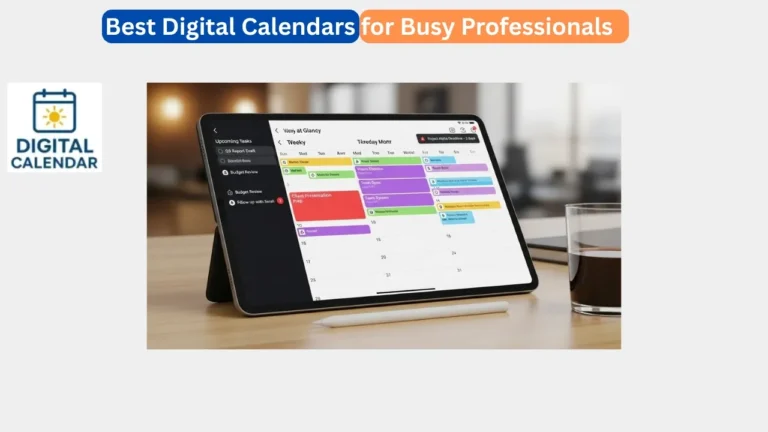
The digital calendar transforms each day planning by exposing information in the form of visibility and flexibility. When something is different, I no longer have to write plans over again. Updates happen instantly. This is cost effective in terms of time and space. Planning feels cleaner. I see my entire day at a glance. That clarity improves focus.

Using a paper planner, I used memory and checking on a regular basis. An electronic calendar remains present. It reminds me passively. I do not need to flip pages. This change lightened the burden of planning. Digital planning is more adjusted to the contemporary schedule.
Best Digital Calendars
Flexibility Compared to Paper Planners
The flexibility is the area where the digital calendars shine through. Whenever there is a change in the plans, I just update the calendar with a simple edit. Nothing can be erased or rewritten. Everything stays neat. This elasticity causes less frustration. It allows quick adjustments.
This is a problem of paper planners. Changes cause mess when they are written. I usually did not update to maintain pages clean. Online time schedules eliminate that indecisiveness. Accuracy is promoted by flexibility. Proper organization is a result of proper plans.
How to Use Digital Calendar’s Features – Complete Guide
How to Use Digital Calendar’s Features 2 – Complete Guide
Visibility and Accessibility
Another significant dissimilarity is visibility. An electronic calendar may be located on the wall or a common display. I see it throughout the day. This is due to the constant visibility that keeps plans on the agenda. I do not forget tasks easily. The access is enhanced automatically.
A paper planner tends to be closed. I must remember to open it. That extra step matters. Digital calendar eliminates such a barrier. Planning is changed into passive with visibility. That in itself makes effectiveness.
Best Digital Picture Frames
Managing Multiple Schedules
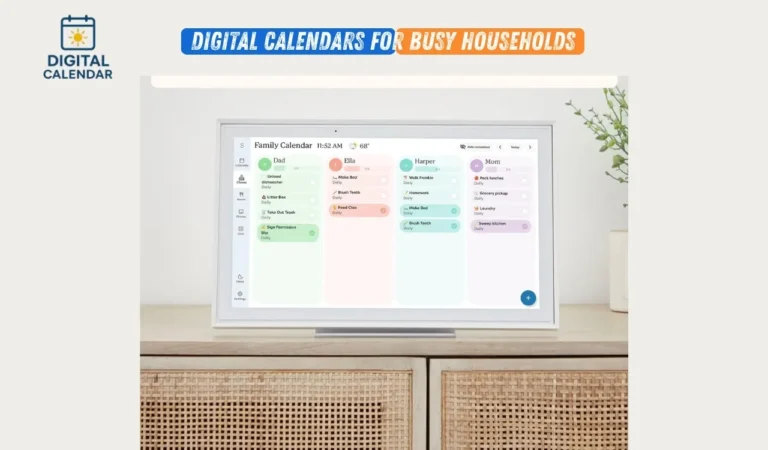
A digital calendar facilitated the management of various schedules. There is a coexistence of work, personal activities and routines. They are separated with the assistance of color coding. I can filter views easily. Organization is organized.
Using a paper planner, it was too daunting to mix schedules. Pages filled quickly. Separation was limited. Online calendars are less complex. They scale with busy lives. This was a great difference to me.
Digital Calendars
Habit Building and Consistency
Digital calendars assist in the development of habits by repetition. Repeating tasks are displayed automatically through automation. This supports practices on the day-to-day basis. There is also consistency without additional effort. Habits form naturally.
Planners with paper need to be repeated by hand. I frequently did not remember to rewrite routines. Electronic calendars eliminate that process. Discipline is supported by automation. After some time, habits become automatic. This uniformity is a strong one.
Where Paper Planners Still Feel Better
Paper planners are not completely eliminated. Writing feels personal. It slows the mind. I enjoyed that connection. Other individuals work better on paper. That experience is valid.
Paper planners still offer:
- A tactile writing experience
- No screen involvement
- Creative freedom
- Personal attachment
- Minimal technology reliance
These strengths explain why paper planners remain popular. They serve a different purpose. Preference matters here.
Reducing Mental Load
Online schedules make a big time in terms of mental load. I do not recall all of them anymore. The calendar carries with it information to me. This frees mental space. Stress reduces naturally. Planning feels calmer.
Paper planners need to be active. I needed to recollect to check them. Electronic schedules eliminate such a load through gentle alerts. They help the brain to be silent. This variance had an impact on my day to day energy.
Sharing and Collaboration
It is simpler to share plans in digital calendars. The same information is observed by the family members or teammates. Communication improves. Misunderstandings reduce. Everyone stays aligned.
Paper planners are personal. To share, one needs to copy information. Collaboration is easily facilitated by the help of digital calendars. This is particularly helpful in the shared settings. It adds real value.
Long-Term Practicality
Digital calendars are more preferable in the long-term. They do not run out of pages. They store years of data. Search makes retrieval easy. Planning history is still available.
Space is a constraint to paper planners. When they are filled, they are archived. Calendars are becoming digital with time using storage. Such practicality assists in organizing long term. It feels sustainable.
Making the Transition from Paper to Digital
The change is a process of adaptation. I started by using both. Digital planning became less difficult. I trusted it more. The paper planner was no longer necessary over time.
The transition was successful since the digital calendar was accommodating to my schedule. I did not force it. I let habits form naturally. Such a slow transition made the replacement successful.
FAQs: Digital Calendar Replace a Paper Planner?
Conclusion
In my case, I can substitute a paper planner with a digital one in the vast majority of cases. It provides flexibility, visibility and consistency which paper cannot offer. The process of planning becomes less stressful. Everyday life is facilitated and not controlled.
Nonetheless, paper planners have not lost emotional and creative value. The option that is optimal hinges on way of life and taste. In my case, the digital calendar was used as a digital tool. It ousted paper not by coercion, but by action. It is what enabled the change to be lasting.
Fore more information about Digital Calendars and Picture Frames ,then hit the button.