Digital Calendar vs Paper Calendar
Digital calendar vs paper calendar comparison to help you choose the best option for home, work, and daily scheduling needs.
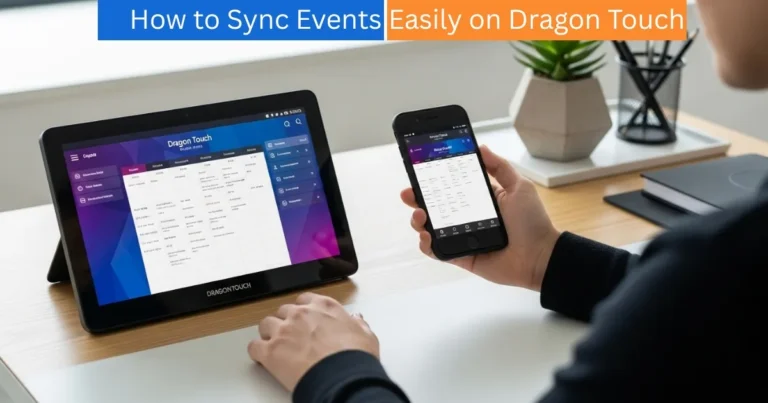
A digital calendar is an electronic application that allows one to manage schedules, events, reminders, and tasks with the help of digital devices including smartphones, tablets, computers, or smart displays on the wall. The digital calendars unlike the conventional planning methods offer real-time updates, automatic reminders, and cloud-computation across devices. This implies that any alteration done in one location is immediately reflected in all locations and confusion and lost events are minimized. Families, professionals, students and even businesses find it easy to use digital calendars because they are flexible and convenient.
Automation is yet another important benefit of digital calendars. The users are able to do recurring events, reminders, and alerts without necessarily having to rewrite anything. Several digital calendar systems are also compatible with shared access, meaning that schedules can be viewed or edited by more than one individual. This renders them suitable in the contemporary homes and working settings where coordination is mandatory.
Amazon Affiliate Disclaimer
https://digicalendars.com participates in the Amazon Services LLC Associates Program, an affiliate advertising program designed to provide a means for websites to earn fees by linking to Amazon.com and other affiliated sites. As an Amazon Associate, we earn from qualifying purchases made through the links on our website. This does not affect the price you pay your support simply helps us maintain the site and continue offering honest, valuable reviews and recommendations.

Best Digital Calendars
What Is a Paper Calendar?
A paper calendar is a conventional planning device that is printed on paper, which is typically in the form of wall calendars, desk planners or diaries. It enables users to handwrite the dates, events and notes. Paper calendars have been in existence and people still prefer using them because of the physical nature of writing and the visual simplicity. They do not need electricity, the internet, or technical skills to operate.
The use of paper calendars is limited, however. Any modification means erasing or rewriting; this may appear to be messy with time. They are also not dynamic, that is, updates can not be shared immediately with others. Although paper calendars may be good looking and artistic, they are totally dependent on human hands and memory, which may not be helpful in a hectic schedule.
User-Friendliness: Paper Calendar vs Digital Calendar
Digital calendars are obviously more convenient when it comes to ease of usage. It only requires a few clicks or taps to add, edit or delete events. The users are able to create reminders, color-code their events and create schedules in a very short time. Digital calendars also minimize human error, as they send notifications in advance, and the users can keep track of their schedule, without using their memory.
Paper calendars, however, are not complex but restricted. Manual writing is not a difficult task, but it is inconvenient to deal with a lot of constant changes. It is easy to forget to look at the calendar or forget about handwritten notes. Although it is simple to use paper calendars, they are not as flexible and efficient as digital calendars in everyday life.
Digital Calendars
Bending and Revising Schedules
The digital calendars are the best in flexibility. Plans can be modified and digital calendars can be updated instantly without any clutter. Should a meeting need to be rescheduled or an event cancelled, the user can update the meeting or event instantly and all people with access will notice the update. Such real-time flexibility is particularly useful to families and work places that have dynamic schedules.
Paper calendars find it difficult in this regard. Modifications involve either erasing or rewriting data, and it may get mixed up and disorganized. It is not easy to inform people about changes, unless you inform them personally. This renders paper calendars less viable when it comes to expedited schedules and collective scheduling.

Best Digital Picture Frames
Sharing and Collaboration Comparison
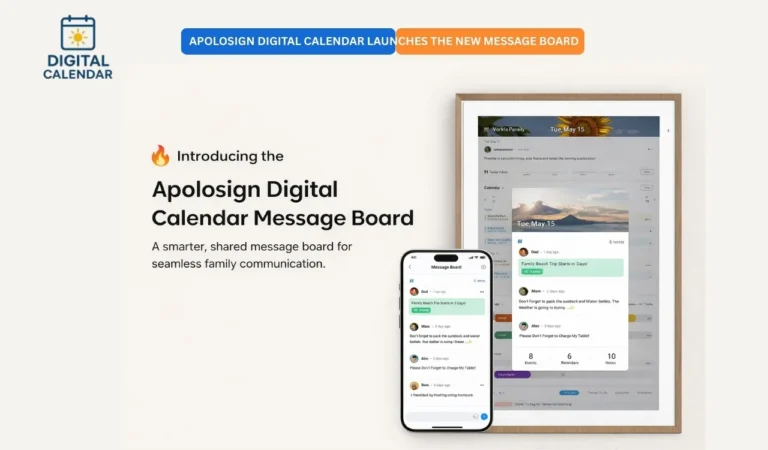
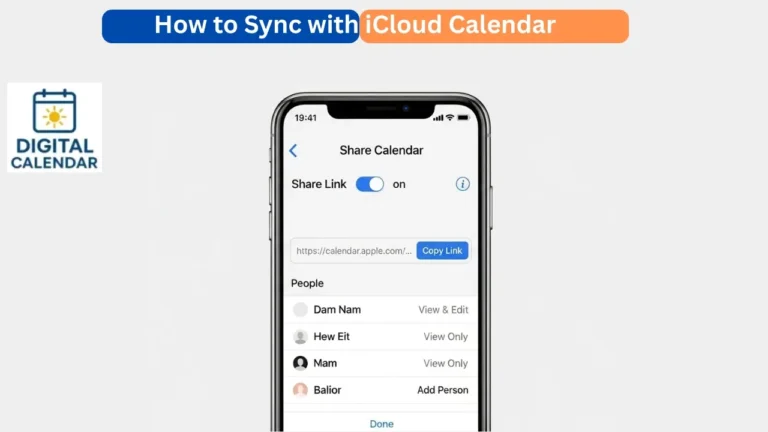
Sharing and collaboration is one of the largest benefits of digital calendars. Digital calendars can be shared by numerous users and are therefore ideal with families, teams, and companies. Parents are able to organize family activities, employees to organize meetings, and all people remain updated without having to communicate all the time.
The use of paper calendars can only be in a single place. The information can be accessed only by people who view the calendar. To share updates, one needs verbal communication or messages, which contributes to the probability of misunderstandings. In the case of collaborative planning, paper calendars are obviously inferior to digital calendars.
How to Use Digital Calendar’s Features – Complete Guide
How to Use Digital Calendar’s Features 2 – Complete Guide
Notifications and Reminders
Digital calendars have automatic reminders and notifications which are vital in busy lifestyles. The user gets warning messages on what to expect and this allows them to be prepared. These reminders lower the occurrence of forgetfulness and mental pressure particularly when it comes to vital activities such as appointments or deadlines.
Paper calendars are completely dependent on memory. Without looking at the calendar, the events may be overlooked very easily. No alerts and notifications are provided, which makes paper calendars less effective to people who have a busy schedule. This is the only difference that makes digital calendars a superior choice in terms of time management.
Cost and Long-Term Value
Paper calendars tend to be less expensive initially since they need to be purchased once. They must however be changed on an annual basis, a factor that introduces recurrent expenses. In the long run, this may not be very cost effective, particularly in cases where the household employs more than one planner.
Digital calendars are often complimentary in the form of applications or they are part of devices. Even the wall-mounted digital calendars, which are costly in the short run, also have long-term benefits in the form of durability, updates and multi year usage. Digital calendars have higher ROI in the long term.
Which of the two is better at home use?
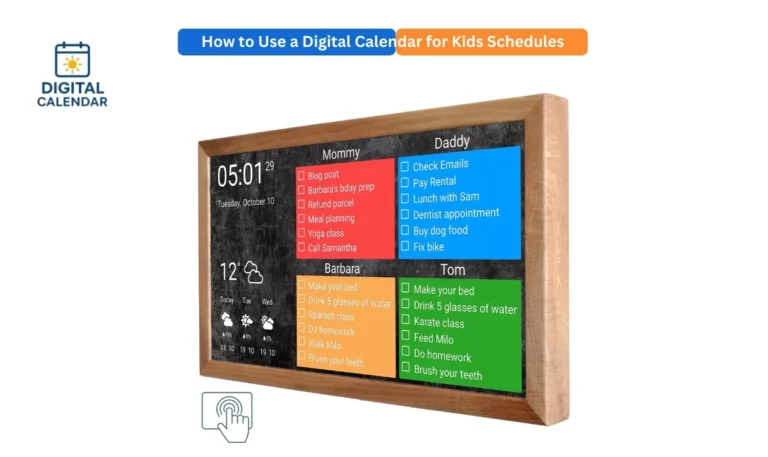
Digital calendars have much greater advantages in terms of home use. Families are able to organize schedules, chores, reminders and events within a single place. Digital wall-mounted calendars are used as the central spots to enhance communication and minimize confusions of every day.
Simple households that have few time requirements in terms of scheduling may still utilize paper calendars. Nevertheless, the busier the routine, the less effective paper calendars may become. Digital calendars are better organized, more automated, and can be accessed by many people, which makes them much more appropriate in the context of modern homes.
FAQs
Conclusion
In the context of comparing a paper and digital calendar, it is evident that digital calendars have been more flexible, convenient, reminders, and collaboration. Although paper calendars are not obsolete as they are somewhat nostalgic and aesthetic, the aspect of the calendars is not up to date with the contemporary fast-paced life. Electronic diaries make it easier to organize, avoid stress, and enhance communication in the home and workplace. A digital calendar is the smarter and future-proofed option to those who need to control their time better.